English football may boast five representatives in the Group Stages of the Champions League this season, but quantity alone won’t be enough to reverse the tide. The progress of English teams in Europe’s top tournament has steadily declined since Chelsea and Manchester United both reached the final in 2008; the last seven years have seen just seven sides make the quarter-finals and only two teams go further than the semis.
Yet, there are signs that pattern will come to a natural end. For starters, the Champions League works in cycles and the Premier League now boasts unquestionably the greatest cohort of managers in the world, not least including five who’ve reached the ultimate stage of the tournament before.
But following the announcements of the Champions League squads for the Group Stages earlier this week, one side particularly stands out as candidates to put English football back on the European map – Manchester United. Here’s why.
Room for a new dominant force
As previously discussed, dominance of European football tends to move in cycles – it’s incredibly telling that we’ve seen all-English, all-Italian, all-German and all-Spanish finals over the last 15 years – and it appears the Spanish cycle could be coming to an abrupt end. Atletico have been stifled by their transfer ban, Barcelona are unquestionably on the decline and although Real Madrid are still theoretically the strongest side in Europe, it seems unlikely they’ll claim a third consecutive title after becoming the first club to win two throughout the Champions League era.
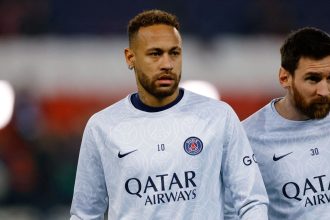
In a nutshell, space for a new dominant force could open up this season. Logic suggests PSG are easily the best-placed to fill it after signing Neymar and Kylian Mbappe to complete a frighteningly talented side. But the French giants are often disadvantaged by the lack of competitiveness in their domestic league and as well all know, money doesn’t always mean prizes in football. The opportunity is there for an English club to take the initiative and Manchester United are the best-equipped to do so.
Huge squad depth
Following some big summer arrivals, Manchester United boast one of the strongest starting XIs in the Premier League, but their overall squad is far more impressive. It speaks volumes that players like Anthony Martial and Victor Lindelof, widely regarded as two of the most promising youngsters in Europe, are struggling for game-time, alongside considerably more experienced options in Marcos Rojo, a former World Cup finalist, Michael Carrick, a former Champions League winner, and Ander Herrera, last season’s Player of the Year at Old Trafford. Then there’s the not-so-small matter of Zlatan Ibrahimovic re-signing for the Red Devils; he’s been included in the Group Stages squad.
Jose Mourinho showed how effectively he can utilise that immense depth last season in the Europa League, the Red Devils strolling their way to the title with minimal fuss largely relying on squad players to keep their Premier League campaign alive. The Champions League is obviously a lot tougher than its younger sister but Mourinho has a vaster, stronger and more varied squad available to cope with the extra demands.
Built to last
There’s a very obvious trend linking Jose Mourinho’s signings since being appointed Manchester United manager – height and power. Nemanja Matic and Romelu Lukaku added to the equation this summer, alongside the likes of Ibrahimovic, Eric Bailly and Paul Pogba from Mourinho’s first transfer window in the Old Trafford hot seat.
While physicality tends to have a far bigger influence in the Premier League than the Champions League, where natural quality usually overcomes sheer athleticism, the true impact of Mourinho’s juggernaut starting XIs have already become evident in the top flight; seven of United’s ten Premier League games have come in the closing stages of matches, after their opponents have relentlessly been worn down.
If we extrapolate that over the course of the full season rather than ninety minutes, it could well be the latter stages when United truly come into their own, especially when compared to English football’s fellow Champions League representatives this season.
Indeed, it’s often claimed the sheer congestion of the English calendar, combined with the absence of a winter break, disadvantages clubs in Europe’s top tournament, but United boast the natural athletes to cope with those domestic demands, especially if they’re rotated effectively, while holding their own in the Champions League.
Jose Mourinho
The difference between a club possessing the tools to do well in the Champions League and a club actually doing well in the Champions League – a manager of Jose Mourinho’s experience, desire and ability.
The Special One may not seem as special as he once was but his philosophy and tactical mind is almost purpose-built for low-scoring double-leg affairs in Europe where one fortuitous away goal can separate everything – something that was evident in abundance last season as United steadily passed through the Europa League with little more than the odd wobble.
Of course, Mourinho has won Europe’s top honour twice before, firstly with an incredibly unfancied Porto side and secondly with Inter Milan, but he even managed to steer the Chelsea team inherited in summer 2013 to the semi-finals – and the current United squad is far more talented than that.
In fact, the Portuguese’s lose rate in the Champions League stands at just 21% and he’s made the semi-finals on eight occasions. Clear knowhow which, combined with his side’s depth and durability, could make the Red Devils a real force this season.